
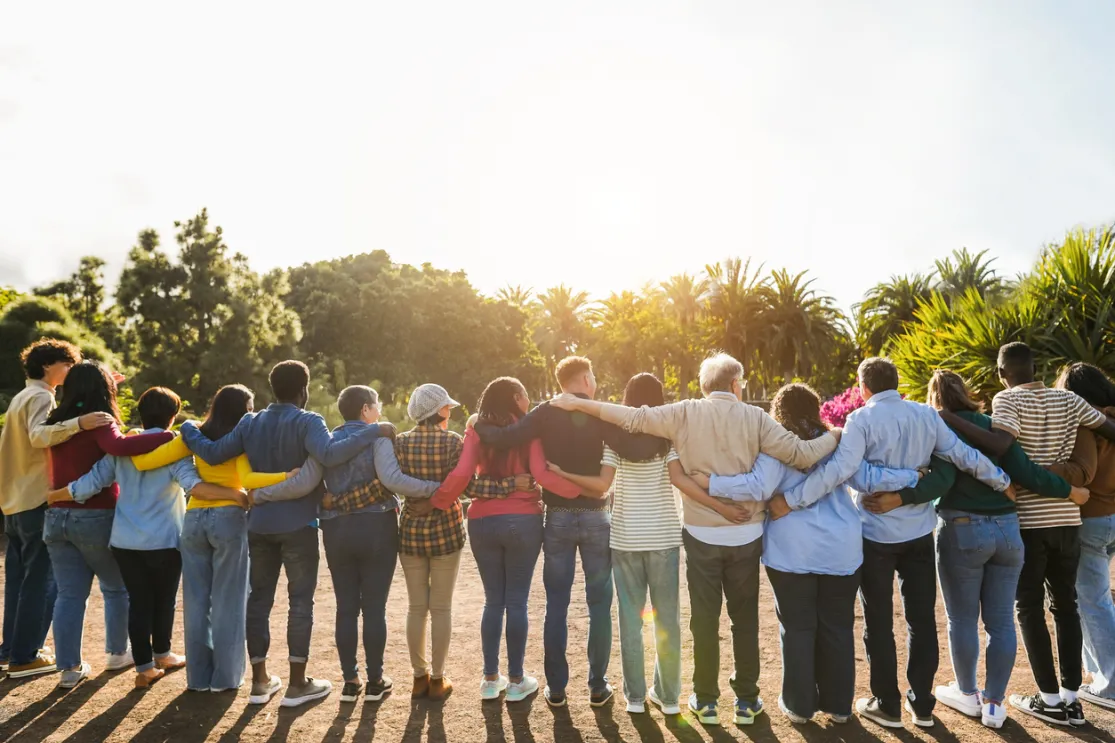



"When people have diabetes, we understand it’s a disease caused from a part of their body that is not working correctly. Yet when people have dementia or a mental illness, we may struggle with wondering why they act the way they do. Dementia is a disease of the brain, no different than diabetes is a disease of the endocrine system."
-Betty Christensen-former MNRAA (Minnesota River Area Agency on Aging) Program Coordinator and BSAMLC Member
“Thirty years ago, my Mom’s twin sister was diagnosed with Alzheimer’s. People were very unkind and frightened of her. As the disease progressed and required more services – none were available. Thank goodness some of this has changed but more work needs to be done. All people deserve to be treated with respect and dignity. That is my mission!"
-Ranet Schmeichel- Retired RN (Registered Nurse), BSAMLC President
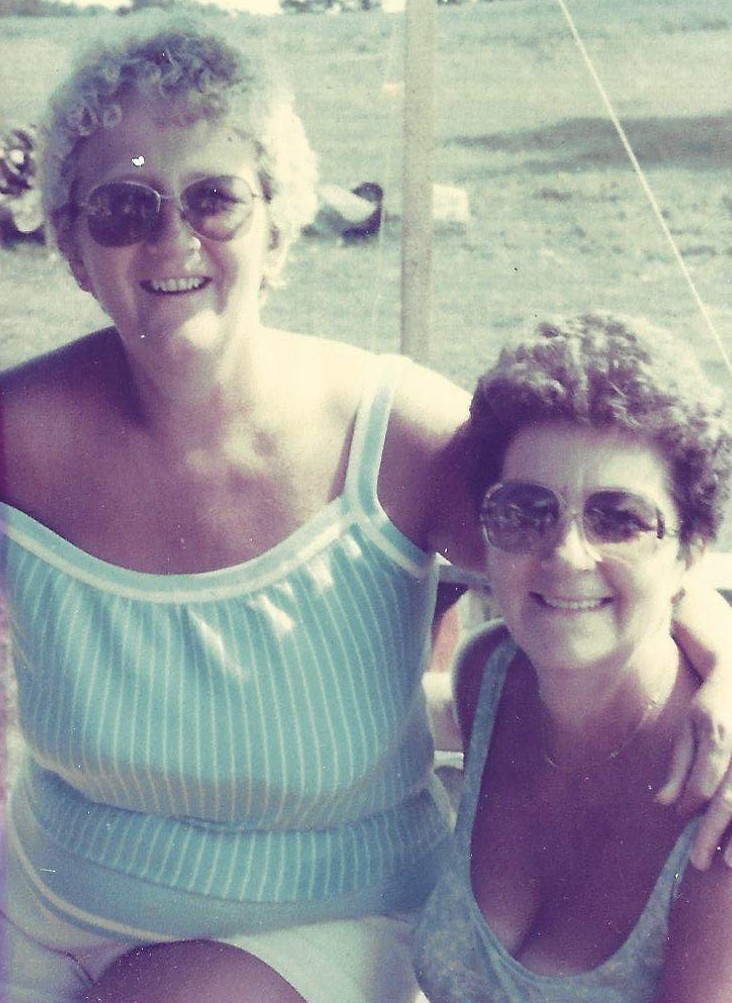
My husband's mother had dementia. I was not his wife when she was diagnosed or as the disease progressed. I only knew the family slightly through work where I saw Georgia on a very limited basis. Since we have been married, Kim has shared memories of some of the difficulties he faced while caring for his mom at home. It was not easy. Having a group to contact to ask about information or services would have been helpful. The Memory Cafe would have been a welcome outlet and support for him. I am, naturally, aware that Alzheimer's is a hereditary disease and at some point, Kim, his siblings, or other relatives may be diagnosed with it. This group is an asset to Big Stone County. While we pray I never need its support, it as a comfort to know that the organization is here to help!
-Linda Kolb-BSAMLC Vice President, Prairie Five
My extended family meets every year at the lake up north. In 2016, my aunt who lives in another part of the state was talking about how her husband wasn't feeling well. His vision had decreased, he seemed confused sometimes, and she wasn't sure about bringing him to the lake where there are lots of hills to navigate and would take him from his daily familiar routine. I offered to stay with him for the weekend so she could go and enjoy her relatives. I remember that he talked a lot about the events of September 11 the first day I was there. The second day, I was preparing our lunch when his demeaner changed and he started making comments that were sexually explicit and inappropriate. I put down the butter knife and texted my aunt in horror. I couldn't believe my uncle was talking to me that way. She was in as much shock and immediately returned home. She told her children what happened, and her son's girlfriend, who was a nurse overheard. "Oh, that sounds just like the dementia patients I deal with everyday!" she exclaimed. Everyone who was close to my uncle had been living in denial about the changes that they had been noticing in his daily life. After doing some reading, I realized that my uncle talked that way to me because his brain was deteriorating. If his brain had been healthy, it wouldn't have happened. Since then, I've been determined to normalize dementia and memory loss instead of having it be a topic that people are afraid to address because of the stigma or the unknown. I love that our group puts education and awareness at the forefront!
-Laura Thomas-Prairie Five, CCAP
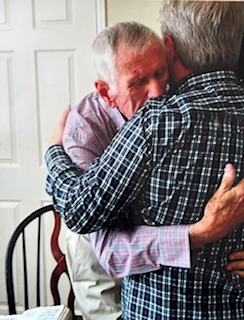
This photo speaks volumes. It is a tribute to my brother-in-law, Rev. Lloyd Jacobsen and his oldest son, Steen. Taken during one of their last visits. It demonstrated the very real, raw need for us to recognize that although Alzheimer's may steal memory, the heart remembers.
-Mary Ross-community member
When I was first asked to be a part of this group I immediately accepted the invite. Over the years I have responded to calls to our elderly population that I knew had the onset of dementia/Alzheimer's and we had no resources at that time that we could provide to help out their families situation. With this group we have many key people involved to provide the resources to family members and make it hopefully a lot less stressful on the person's life and hopefully even offer some relief to them and the family.
-Jason Mork-Deputy Sheriff of Big Stone County
MOMENTS of JOY and SADNESS, but such AN HONOR
Although I worked in a professional capacity for forty years with dozens of people with dementia and their families, I didn't realize how much I didn't know about what it take to be a caregiver, until one of my good friends was diagnosed with dementia.
After my friend's husband died, I realized how much he had been covering for her dementia. She had no one she could rely on to help her through the process and lived 100 miles away from me. When she started calling me five to ten times a night my husband and I got frustrated. We knew she needed someone to reach out to, but also knew she didn't realize she had called me just ten minutes before. She was an extremely independent person and didn't want anyone helping her with her daily tasks.
After weeks of telling her she needed to go to her doctor, I finally got her to see a neurologist. We went to the appointment and she allowed me to be in the room with her. She had already had a CAT scan so I knew she had significant dementia, but she needed to have more testing done so we could come up with a plan. During the neurology visit she couldn't complete any of the tests correctly. The doctor asked her if he could talk with me about her memory issues without her being mad at me. When we came out of the appointment she said, "I know I should be really mad at you but I can't remember why." From that day on I realized I would need to become more involved. It was something that I willingly took on as she had no one she could rely on to help her process. No one should have to go through this journey alone.
The process began with trying to talk her into moving out of her house. She refused. I got calls from neighbors, the hairdresser, the banker and her husband's relatives. At that point I wasn't her guardian so I couldn't do anything about her behavior. I always asked the people calling me to report what they were telling me to their County Vulnerable Adult unit as it was the only way we were going to get her a safer place to live.
When she decided she was well enough to live by herself, but wasn't eating or drinking or answering the phone, I called the sheriff's department in her county to do a safety check. They called an ambulance and she was hospitalized, and then sent to a mental health facility. She was put on so many medications she couldn't even function normally. It was so sad to see her this way. I told myself that no one should ever be treated that way as it was not how anyone should have to live out their life.
Long-long story short, I became her healthcare power of attorney and "helped" her find a great place to live for three years.. It was only eight miles from my home so I could visit or call often. She believed she was the owner of where she lived so therefore was the boss. She sat with her cup of coffee and told staff what to do all day long. The staff were very good about playing along with this behavior.
Even though it was a difficult journey, we had many great visits and I have great memories of the times we spent together. I think of her often and smile.